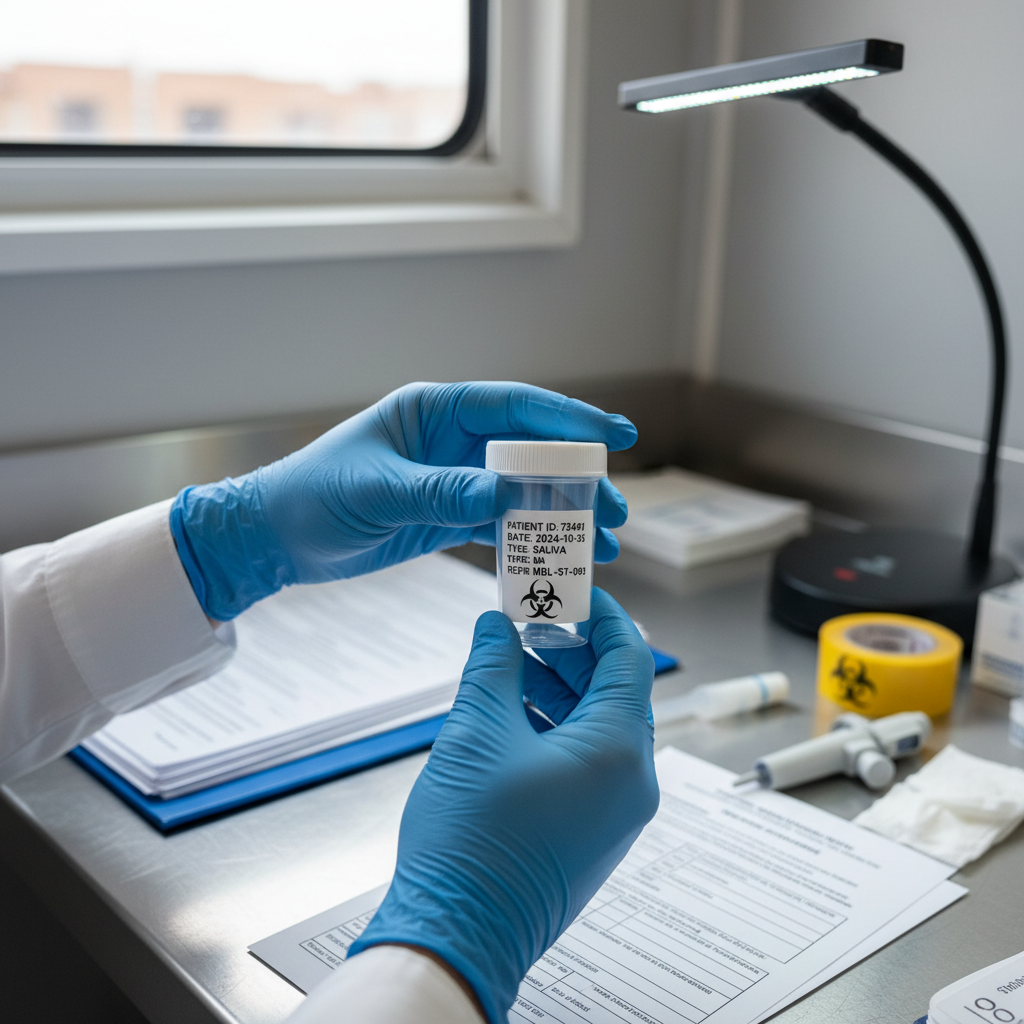
The DOT urine specimen collection process involves verifying donor identity, securing the testing area, and collecting a minimum of 45 mL of urine split into two separate bottles. Collectors must seal the specimens in the presence of the donor and document the procedure using the federal Chain of Custody Form to ensure total accuracy. Following these specific 49 CFR Part 40 guidelines allows Charlotte employers to maintain compliance and successfully pass federal safety audits.
For Charlotte business owners, the threat of a DOT audit is more than a minor inconvenience; it is a significant liability that hinges on the precision of a single specimen. A single procedural error during the collection process can render a result invalid, leading to costly fines and legal vulnerabilities. Understanding the specific logistics of the DOT urine specimen collection process is not just a regulatory necessity; it is your primary defense against compliance failures. In this guide, we break down the rigorous standards required for every phase of testing, from site preparation and donor identification to volume requirements and temperature verification. You will learn how to master the Federal Chain of Custody Form and identify the fatal flaws that often trigger federal intervention, ensuring your company remains audit-ready and legally sound.
Why the DOT Urine Specimen Collection Process is Your Best Defense Against Audits
The DOT urine specimen collection process is a rigorous, step by step protocol defined by 49 CFR Part 40 to ensure the integrity and validity of workplace drug testing. While drivers often view this as a routine medical hurdle, savvy employers recognize it as a critical risk management tool. For Charlotte industries operating high volume logistics along the I-77 corridor or managing large scale construction projects near Uptown, the collection process is the primary safeguard for maintaining operating authority.
Strict adherence to these federal rules protects a company from legal liability and operational downtime. A single procedural error by a collector can lead to a canceled test, which effectively nullifies the result and leaves the employer without the necessary documentation for compliance. During a DOT audit, these technicalities become expensive liabilities. The Department of Transportation views procedural failures as a breach of safety standards, often resulting in significant fines per violation. By utilizing professional DOT and non-DOT specimen collection services, employers ensure that every sample meets federal mandates from the moment the donor walks in. Understanding these nuances helps managers prevent flawed collections that could otherwise trigger an investigation. If you have questions about how these regulations apply to your fleet, you can contact our Charlotte office for expert guidance on maintaining a compliant workplace.
Phase 1: Securing the Collection Site and Preparing the Environment
Maintaining a secure environment is the foundation of a defensible drug test. Before a donor ever enters the restroom, the collector must transform the facility into a controlled environment that eliminates opportunities for cheating. Federal guidelines under 49 CFR Part 40 are uncompromising; a "secure site" is a mandatory requirement for a valid DOT urine specimen collection process.
Collectors begin by adding bluing agents to the toilet water and tank. This dye serves as a visual indicator to ensure the donor does not dilute their specimen with water from the bowl. Furthermore, all soap dispensers, disinfectants, and cleaning chemicals must be removed or secured. These common items are potential adulterants that can interfere with laboratory testing and lead to a canceled result. Even a small amount of hand soap introduced to a sample can trigger a laboratory finding of "adulterated," which carries the same weight as a refusal to test.
The final step involves securing all other water sources. Faucets must be taped off or the water supply turned off entirely to prevent unauthorized access during the collection. For Charlotte businesses, these physical safeguards are critical during a DOT audit. An auditor will specifically look for evidence that the collection site was prepared to these exact standards. If water sources are accessible or bluing agents are missing, the integrity of your entire testing program could be called into question. Ensuring these protocols are met is a primary reason to utilize professional DOT and non-DOT specimen collection services, as it places the burden of environmental security on trained experts rather than site managers. This preparation ensures that the subsequent administrative steps occur in a space that is legally beyond reproach.
Phase 2: Donor Identification and Administrative Protocol
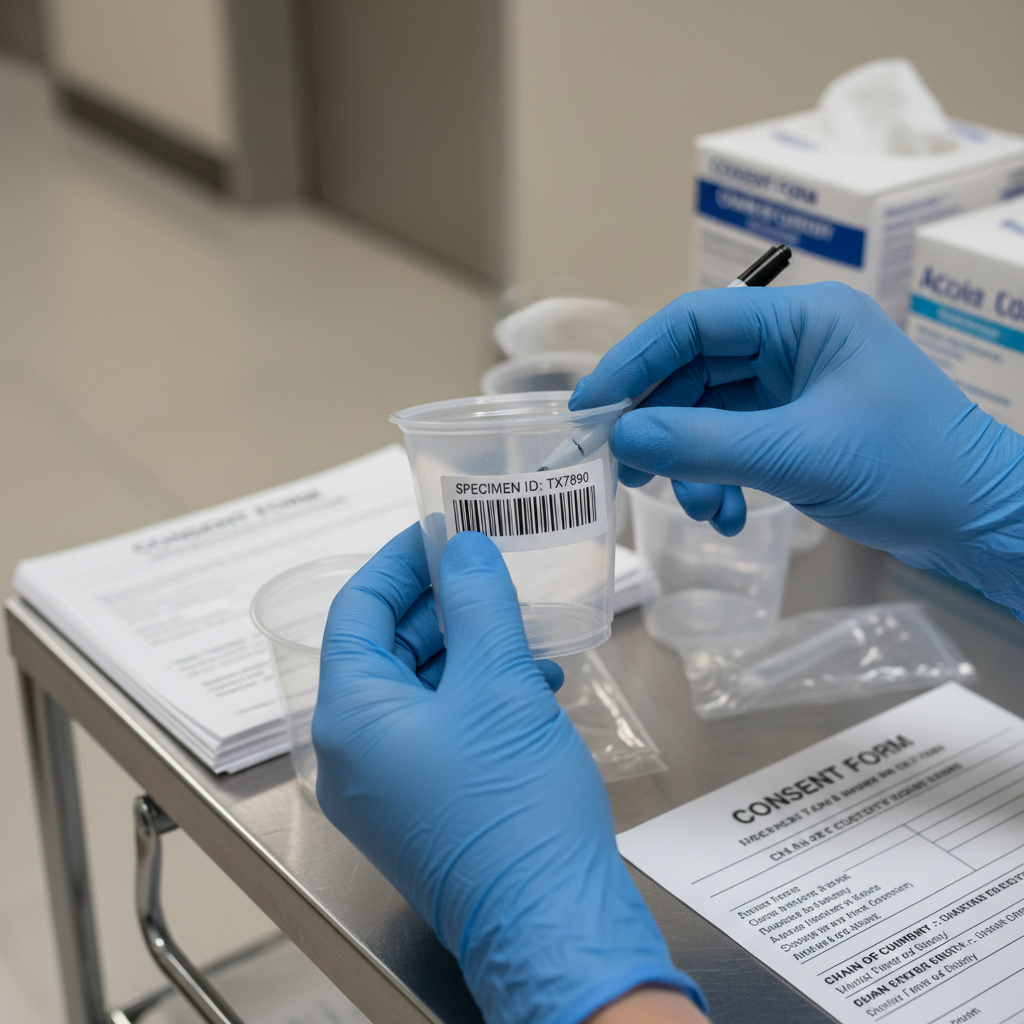
Once the physical site is secured, the administrative protocol begins to ensure the legal integrity of the sample. The DOT urine specimen collection process requires the collector to first verify the donor's identity using a valid, government issued photo ID. This step is critical; failing to confirm the donor’s identity is classified as a fatal flaw under federal regulations, rendering the test results inadmissible during a DOT audit.
Following identification, the collector must instruct the donor to remove all outer garments, such as coats, jackets, hats, or coveralls. These items, alongside bags, purses, and briefcases, must remain in a secure area outside the collection room. This is a standard security measure to prevent the introduction of adulterants or synthetic samples. The donor is then required to undergo a pocket check by emptying all pockets and displaying the contents. While the donor may retain their wallet, all other items like mobile phones and keys are placed in a secure container. These administrative hurdles are designed to eliminate opportunities for subversion before the donor ever enters the restroom. Utilizing professional DOT and non-DOT specimen collection services ensures these intake steps are handled with the necessary clinical rigor to protect your company's compliance record.
Phase 3: The Collection and Volume Requirements
With the administrative intake complete, the collector provides the donor with a clean, single use specimen container. This initiates the physical phase of the DOT urine specimen collection process. Federal regulations are precise regarding volume; the laboratory requires a minimum of 45 milliliters of urine to perform both the primary and split sample tests. If a donor provides less than this amount, the collector must discard the partial sample and initiate the shy bladder protocol.
Under this protocol, the donor has a maximum of three hours to produce a sufficient specimen. During this time, the collector may provide up to 40 ounces of fluids to assist the process. The donor must remain at the collection site under supervision throughout this period. For Charlotte logistics managers, this three hour window is a critical operational consideration, as a donor leaving the site before the time expires or before providing a sample is documented as a refusal to test, which carries the same weight as a positive result.
While most collections are unobserved to protect donor privacy, 49 CFR Part 40 mandates direct observation in specific scenarios. This includes all Return to Duty and Follow-up tests, or situations where the collector notices suspicious behavior or physical evidence of tampering. Direct observation requires a collector of the same gender to watch the specimen leave the donor's body. At TL Works, we handle these sensitive requirements with strict professionalism to ensure driver dignity while maintaining the legal integrity of the sample. Utilizing expert DOT and non-DOT specimen collection services ensures that these high stakes interactions are documented correctly, protecting your company from liability if a driver challenges the collection method. If you have questions about when observation is required, you can contact our Charlotte office for clarification.
Phase 4: Temperature Verification and Split Sample Processing
Immediately after the donor provides the sample, the collector must perform a temperature verification. This is a high-stakes moment in the DOT urine specimen collection process. The collector has exactly four minutes from the time of voiding to read the temperature strip on the side of the collection cup. The sample must register between 90 and 100 degrees Fahrenheit. Any reading outside this range, or a failure to record the temperature within that four-minute window, is a significant procedural error that can compromise the test's validity during a legal challenge.
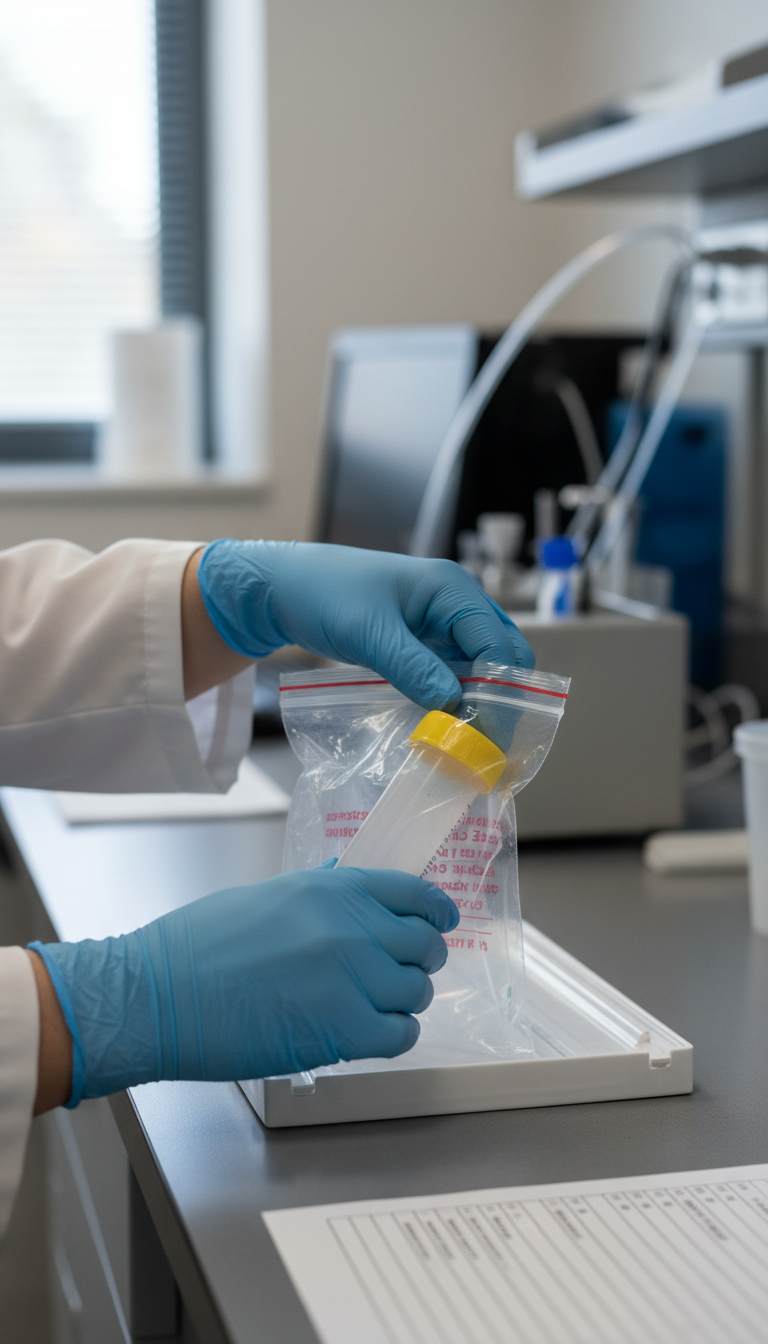
Once the temperature is verified, the specimen is split into two separate bottles in the donor's presence. The primary bottle receives 30mL of urine, while the split bottle receives 15mL. This split-sample method is a federal requirement designed to protect the donor; the second bottle remains available for independent testing at a different DHHS-certified laboratory if the primary bottle returns a positive, adulterated, or substituted result.
Crucially, the specimen must never leave the donor's sight until the tamper-evident seals have been applied to the bottles and the donor has initialed the labels. If a collector moves the sample to a different room or obscures it from view before sealing it, the chain of custody is technically broken. For logistics firms and construction companies in the Charlotte area, ensuring that DOT and non-DOT specimen collection services adhere to this "continuous sight" rule is vital. It eliminates the most common grounds for a driver to contest a result and helps prevent flawed collections that lead to expensive litigation or audit failures. If you need to verify your current collection site's adherence to these standards, you can contact our Charlotte office for a protocol review.
Phase 5: The Federal Chain of Custody Form (CCF) Mastery
The Federal CCF is a five part document that acts as the legal spine of the DOT urine specimen collection process. Every box, from the employer’s account information to the temperature check notation, must be completed with clinical precision. In Step 4, the collector signs to certify that the specimen was handled, labeled, and sealed according to federal guidelines. The donor then signs Step 5, verifying the sample's authenticity and providing their contact information.
For Charlotte businesses, the MRO and Employer copies are the most critical pieces of the paper trail. These documents serve as your primary evidence during a DOT audit; any missing signature or illegible entry can lead to a violation. To mitigate this risk, many North Carolina firms are adopting digital CCFs. These electronic systems reduce errors by requiring all fields to be completed before the form can be finalized, which helps prevent flawed collections resulting from simple oversight. Utilizing professional DOT and non-DOT specimen collection services ensures your documentation is handled by experts who understand the weight of every signature. If you have questions about how digital forms can streamline your records, you can contact our Charlotte office to discuss modernizing your testing program.
How to Identify Fatal Flaws Before They Trigger a DOT Fine

Once the DOT urine specimen collection process concludes and you receive the employer copy of the CCF, the burden of quality control shifts to you. You should never assume the collection site performed a perfect intake. Reviewing the form within 24 hours of receipt is the most effective way to identify fatal flaws before they are discovered by a DOT auditor during a compliance review.
Federal guidelines under 49 CFR Part 40 distinguish between fatal flaws, which automatically result in a canceled test, and correctable flaws, which can be salvaged through a formal affidavit process. For Charlotte businesses, a canceled test creates a dangerous gap in your required testing pool; it is essentially a non-event that leaves you non-compliant and vulnerable to fines.
Flaw Category | Impact | Common Examples |
|---|---|---|
Fatal Flaw | Test Canceled | Missing collector signature; no temperature checked; specimen ID labels not matching the CCF. |
Correctable Flaw | Valid if Fixed | Missing donor signature; minor clerical errors in the employer’s address or phone number. |
If you spot a fatal flaw, you must immediately contact the MRO and the collection site. Catching a missing temperature notation or a collector's skipped signature early allows you to reschedule the driver immediately, rather than discovering the error months later during an audit. Partnering with professional DOT and non-DOT specimen collection services significantly reduces these risks, as experienced collectors function as the first line of defense. To ensure your current records meet these high standards and to prevent flawed collections from impacting your bottom line, contact our Charlotte office for a comprehensive documentation audit.
Understanding the DOT urine specimen collection process is essential for maintaining a compliant workplace in Charlotte. By following these specific steps, you protect your business from audit failures and ensure employee safety. If you want expert help managing these complex requirements, TL Works is here to support your team. Please visit our About page to learn more about our commitment to regulatory excellence and how we help local employers succeed.