A DOT drug test canceled what it means is that a fatal flaw or an uncorrected error occurred during the collection process, rendering the specimen invalid for analysis. This result is not considered a pass or a fail; however, it requires the employer to perform a new collection to ensure the driver meets dot compliance drug testing standards.
Receiving notification that a DOT drug test has been canceled is more than just a minor administrative annoyance. For safety officers and fleet managers, it represents a significant disruption in operations, lost productivity, and potential non-compliance risks. A canceled test means the entire process must be repeated, often at the employer's expense, while the driver remains in a state of professional limbo. This failure usually stems from procedural errors during collection, ranging from simple clerical mistakes to critical fatal flaws. In this guide, we will examine exactly what a canceled result means for your business, the specific differences between fatal and correctable flaws, and the financial impact on your bottom line. Most importantly, you will learn practical strategies to improve collection accuracy and ensure your drug testing program remains audit-ready and legally defensible.
The Frustration of a Canceled DOT Drug Test Result
Imagine a scenario where your driver is scheduled for a long haul, the truck is loaded, and the logs are set; then your Medical Review Officer (MRO) calls with bad news. The specimen collection was flawed and the test is canceled. For a safety sensitive position, a canceled result is essentially a non-event. It provides no legal clearance because it is not a negative result, yet it prevents the driver from performing safety sensitive duties until a new, valid negative result is secured.
Understanding a DOT drug test canceled what it means for your bottom line is crucial. This administrative failure creates a logistical bottleneck where the employer remains responsible for the costs of the collector, the laboratory processing, and the MRO review time, even though the test is void. Data shows that only 7% of carriers pass DOT audits without violations, often due to preventable errors in DOT specimen collection services. A single missing signature or an incorrectly transcribed ID number can turn a routine requirement into a costly delay.
TL Works serves the Charlotte, North Carolina, area as a specialist in high precision collections. We understand that a drug test is only as good as the paperwork and procedures behind it. By focusing on the strict requirements of 49 CFR Part 40, we help employers avoid the wasted time and redundant expenses that occur when a collection goes wrong. If you are tired of administrative errors sidelining your fleet, contact TL Works to ensure your next collection is handled correctly the first time.
DOT Drug Test Canceled: What It Means for Employers and Drivers
A canceled test is fundamentally an administrative or procedural failure rather than a biological one. Under the strict guidelines of 49 CFR Part 40, a test is canceled when an error occurs during the collection, transport, or laboratory phase that is so severe it invalidates the entire process. When asking what a DOT drug test canceled what it means for the driver and the company, the answer is that the specimen is legally unusable. It is not a pass, nor is it a fail; it is as if the test never happened, except the employer is often still liable for the costs.
It is important to distinguish between a canceled test and an inconclusive result. Employers often ask about the possible reasons for a drug test result to be inconclusive. Inconclusive results, such as a specimen that is dilute, substituted, or adulterated, typically indicate a problem with the specimen itself provided by the donor. In contrast, a canceled result usually stems from a breakdown in the chain of custody or a clerical oversight by the collector or lab. While an inconclusive result might lead to a direct observation retest or a medical evaluation, a canceled test simply stops the clock, requiring a complete restart of the process to remain compliant.
Understanding the nuances of DOT vs non-DOT drug testing helps highlight why these procedural standards are so rigid. In the DOT world, the Federal Custody and Control Form (CCF) is a legal document. Any deviation from the mandated steps for handling that document or the specimen bottles creates a liability that the MRO cannot ignore. For the driver, this means a frustrating wait. For the employer, it means a gap in safety sensitive coverage that could have been avoided with a more diligent collection partner.
Understanding Fatal Flaws in Specimen Collection

In the context of DOT specimen collection services, the term "Fatal Flaw" is not an exaggeration. According to 49 CFR Part 40 regulations, a fatal flaw is an error that occurs during the collection process that is so significant it cannot be corrected by the collector, the laboratory, or the Medical Review Officer (MRO) after the fact. When one of these errors is identified, the test is automatically and immediately canceled.
These flaws represent a catastrophic break in the chain of custody. If the legal integrity of the specimen or the identity of the donor cannot be guaranteed, the result is worthless for safety and compliance purposes. Common examples of fatal flaws include:
Specimen ID Mismatch: The identification numbers on the Federal Custody and Control Form (CCF) do not match the numbers on the specimen bottle labels.
Missing Collector Signature: The collector fails to sign the CCF, which serves as the legal certification that the collection followed federal standards.
Broken or Tampered Seals: If a specimen arrives at the laboratory with a broken seal or shows signs that the bottle was opened after the donor provided the sample, it must be rejected.
Insufficient Specimen Volume: The donor provides less than the required 45 mL of urine, and the collector fails to initiate the specific "shy bladder" protocols mandated by the DOT.
Unauthorized Collection Materials: Using a non-federal form or an expired version of the CCF for a DOT mandated test.
For a business owner, these errors are particularly frustrating because they are entirely preventable. When a fatal flaw occurs, the chain of custody is legally severed; there is no document the collector can sign later to save the test. From a regulatory perspective, the specimen is rendered legally useless. During an audit, a pattern of fatal flaws can signal to inspectors that your safety program lacks proper oversight. This underscores the necessity of high precision at the collection site to avoid the logistical mess of a DOT drug test canceled what it means for your fleet's operations.
Correctable Flaws: The MFR Process and How to Save a Test
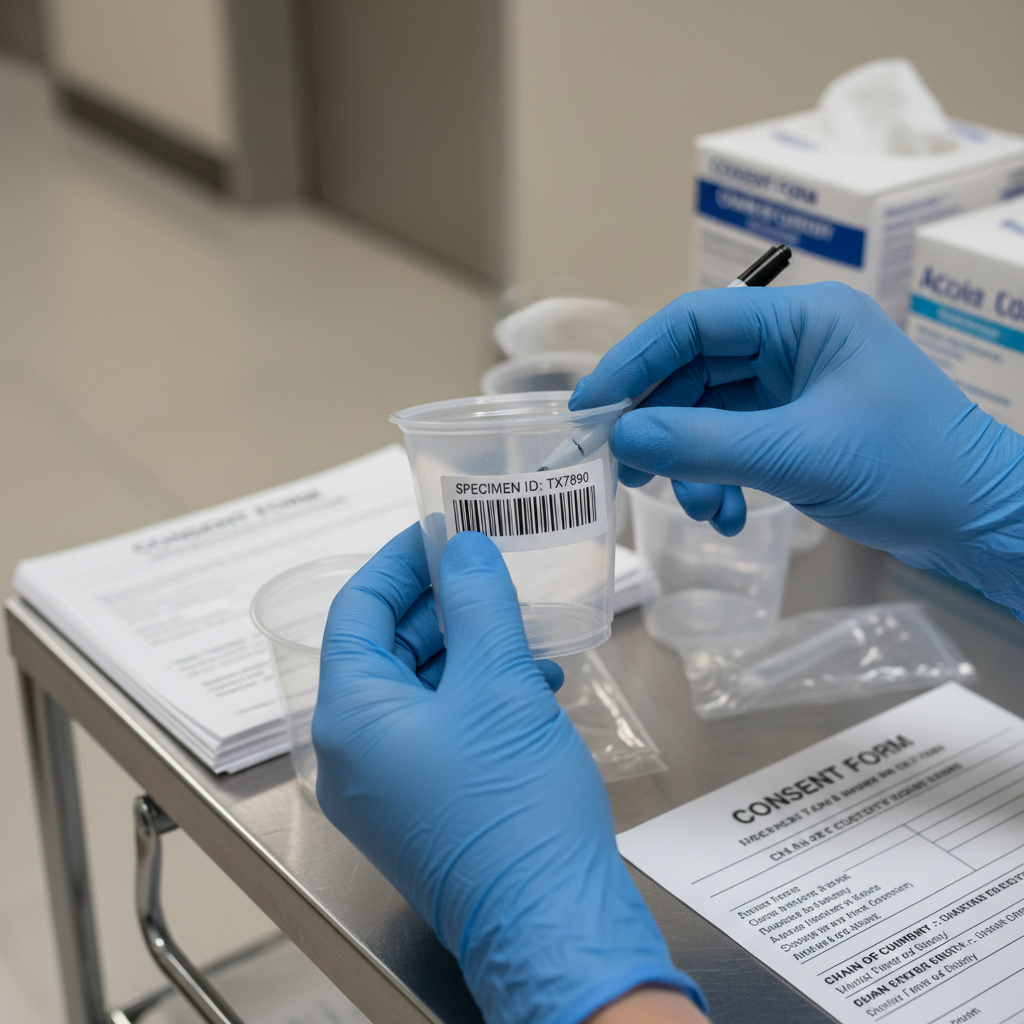
Not every error on a Federal Custody and Control Form (CCF) leads to an immediate void. Correctable flaws include minor clerical oversights, such as a missing date, an omitted printed name when a signature is present, or checking the wrong "reason for test" box. When a laboratory or Medical Review Officer (MRO) identifies these issues, they initiate the Memorandum for Record (MFR) process. This is a critical recovery phase where the collector must provide a written statement to correct the specific error and vouch for the integrity of the collection.
Timing is the most significant hurdle in this process. A collector typically has a five day window to provide the MFR once notified. If the collection site is unresponsive or fails to submit the document within the required timeframe, the test is discarded. This scenario is a primary driver of a DOT drug test canceled what it means for the employer is more lost time and money due to a partner's lack of administrative follow through.
TL Works distinguishes itself through extreme responsiveness. While many high volume clinics treat MRO requests as a low priority, we understand that an MFR is the only thing standing between a valid result and a costly retest. Our DOT specimen collection services include a commitment to administrative accuracy and rapid resolution of any documentation queries. If a correction is needed, we handle it immediately to ensure your driver stays on the road. For reliable oversight, you can contact TL Works today.
The Real Cost of Flawed Collections for Charlotte Businesses
Charlotte serves as a critical junction for the I-85 and I-77 corridors, making it a high stakes environment for the logistics and construction industries. When a collection error occurs at a local clinic, the ripple effect through a company’s operations is immediate. A driver sidelined at a terminal near Charlotte Douglas International Airport or a heavy equipment operator unable to start on a job site represents more than just a scheduling headache; it is a direct hit to the balance sheet.
Calculating the true cost of a flawed collection reveals a significant financial burden. The employer first absorbs the wasted expense of the initial collection, laboratory processing, and MRO review. Because a canceled test provides no legal clearance, the employer must pay a second time for a repeat test. Beyond these direct fees, the most substantial drain is driver downtime. In a market where every hour of service counts, losing a full day of productivity can cost hundreds or even thousands of dollars in missed delivery windows and equipment rental extensions.
Operational costs are only half the story. A high frequency of results marked as canceled on your MRO reports acts as a red flag for FMCSA and DOT auditors. Regulatory bodies often view high cancellation rates as evidence of a poorly managed safety program or a failure to properly vet DOT specimen collection services. This increases the likelihood of a full scale audit, where fines for unrelated record keeping errors can escalate quickly. By partnering with a local specialist that focuses on precision, you protect your bottom line from the compounding expenses associated with a DOT drug test canceled what it means for your fleet. To safeguard your operations, contact TL Works for expert collection oversight.
How to Stop Flawed Collections from Breaking Your Audit Compliance

Maintaining a clean audit record requires proactive oversight of every collection site in your network. The first step is to vet your providers by confirming they follow the DOT’s "Blue Book" procedures to the letter. These federal regulations are the definitive standard for DOT specimen collection services, and any deviation suggests a lack of specialized training that eventually leads to a fatal flaw.
Employers should treat their MRO reports as a performance scorecard for their vendors. By regularly reviewing these reports for "canceled" statuses, you can identify patterns of administrative incompetence. If a specific collection site repeatedly generates MFRs or results in voided tests, they are a direct threat to your compliance standing. Tracking these metrics allows you to pivot away from high volume, low accuracy clinics before an FMCSA auditor flags your program for high cancellation rates. Given that only 7% of carriers pass DOT audits without violations, eliminating preventable collection errors is one of the most effective ways to protect your business.
Rather than relying on generic clinics where specimen collection is a secondary task, choose a dedicated local partner that prioritizes precision over throughput. TL Works serves the Charlotte area with a focus on audit readiness, ensuring that every Federal CCF is completed with the technical accuracy required by 49 CFR Part 40. This specialized approach addresses the root of a DOT drug test canceled what it means for your operation: the need for reliable, legally defensible data. To secure your compliance program and reduce the risk of sidelined drivers, contact TL Works for expert collection management.