
The primary difference in DOT vs non-DOT drug testing is that DOT tests are strictly regulated by federal law for safety-sensitive transportation employees, whereas non-DOT tests are flexible policies developed by private employers. DOT programs require specific five-panel urine tests and certified labs; however, non-DOT programs can utilize various testing methods and expanded panels to suit a company's unique safety goals. Businesses must choose DOT testing if they fall under federal mandates, while others may opt for non-DOT programs to maintain a drug-free workplace.
Navigating the complexities of workplace drug testing often feels like a legal minefield for Charlotte business owners. Choosing the wrong protocol can lead to significant federal penalties, increased liability, or critical safety gaps within your workforce. The stakes are particularly high when you must distinguish between mandatory federal requirements and the discretionary policies allowed for private employers. In this guide, we clarify the essential distinctions between DOT and non-DOT testing frameworks to ensure your business remains compliant and secure. We will examine the gold standard of federal mandates, the flexibility of non-DOT programs in North Carolina, and the specific procedures that separate the two. You will learn how to identify safety-sensitive positions and why a tailored drug-free workplace program is vital for any industry. Our goal is to provide the practical expertise you need to choose the right testing strategy for your unique operational needs.
Understanding the Foundations: Federal Mandates vs Employer Discretion
For Charlotte business owners, navigating the complexities of DOT vs non-DOT drug testing begins with identifying the governing authority for your specific industry. Department of Transportation (DOT) testing is a federally mandated process governed by 49 CFR Part 40. This set of regulations dictates every procedural detail, from collection methods to laboratory analysis, ensuring a uniform safety standard for the nation's transportation infrastructure.
In contrast, non-DOT testing refers to private drug-free workplace programs designed by individual companies. While DOT programs represent a regulated environment, non-DOT programs are considered non-regulated at the federal level. For sectors like trucking, logistics, and heavy construction in North Carolina, knowing which one applies is a matter of legal compliance rather than personal preference. Failing to correctly categorize an employee can lead to significant penalties or audit failures.
Utilizing professional DOT specimen collection services is essential for any role defined as safety-sensitive under federal law. However, many local firms also implement non-DOT specimen collection for general staff to enhance workplace safety and audit compliance. Distinguishing between federal mandates and employer discretion is the first step in building a defensible substance abuse policy that protects both the public and your bottom line.
What is DOT Drug Testing? The Gold Standard of Federal Compliance

DOT drug testing is often referred to as the gold standard because it operates under a zero-tolerance, highly regulated framework. The Department of Transportation mandates these tests for employees in safety-sensitive positions across six key agencies: the Federal Motor Carrier Safety Administration (FMCSA), Federal Aviation Administration (FAA), Federal Railroad Administration (FRA), Pipeline and Hazardous Materials Safety Administration (PHMSA), Federal Transit Administration (FTA), and the United States Coast Guard (USCG). If your business operates within these jurisdictions, compliance is not a choice; it is a federal requirement.
A core feature of DOT specimen collection services is the standardized 5-panel drug test. Federal law dictates that labs must test for five specific categories of substances: opioids (including codeine, morphine, and semi-synthetic opioids like oxycodone), cocaine, amphetamines (including methamphetamine and MDMA), phencyclidine (PCP), and cannabinoids (THC). Unlike other programs, the panels and cutoff levels for these tests are fixed by the government and cannot be modified by the employer.
Consistency is the hallmark of the DOT process. Every collection must utilize a specific Federal Drug Testing Custody and Control Form (CCF), which tracks the specimen from the donor to the lab. Once the lab completes its analysis, the results are reviewed by a Medical Review Officer (MRO). The MRO is a licensed physician who acts as an independent gatekeeper, verifying results and ensuring that legitimate medical explanations for positive tests are considered before a final report is issued. This rigorous chain of custody ensures that DOT vs non-DOT drug testing protocols remain distinct, providing defensible results that meet federal audit standards.
The Flexibility of non-DOT Drug Testing for North Carolina Workplaces
While the DOT framework prioritizes national consistency, non-DOT specimen collection offers North Carolina employers the latitude to address specific regional risks and company goals. The primary advantage of a non-regulated program lies in its customization. Employers are not restricted to the federal 5-panel screen. Instead, you can choose 10-panel or 12-panel configurations that detect substances increasingly prevalent in the local community, such as benzodiazepines, barbiturates, or synthetic opioids like fentanyl and oxycodone.
For a Charlotte construction firm operating heavy machinery on a high-rise project, a standard 5-panel test might not provide sufficient oversight. These businesses often opt for broader panels to ensure that any substance capable of impairing motor skills or cognitive function is identified, thereby protecting workplace safety and audit compliance. This flexibility allows for a more comprehensive safety net tailored to the specific physical demands of the job site rather than a one-size-fits-all federal mandate.
However, this discretion is not absolute. North Carolina employers must still navigate state-level regulations, specifically the Controlled Substance Examination Regulation Act. This law mandates that testing be performed by an approved laboratory and that specific procedural safeguards are met to protect the donor's rights. Additionally, policies must be applied consistently to remain in compliance with the Americans with Disabilities Act (ADA). Understanding these local nuances ensures your DOT vs non-DOT drug testing strategy remains both effective and legally defensible within the Queen City.
Five Critical Differences Between DOT and non-DOT Procedures
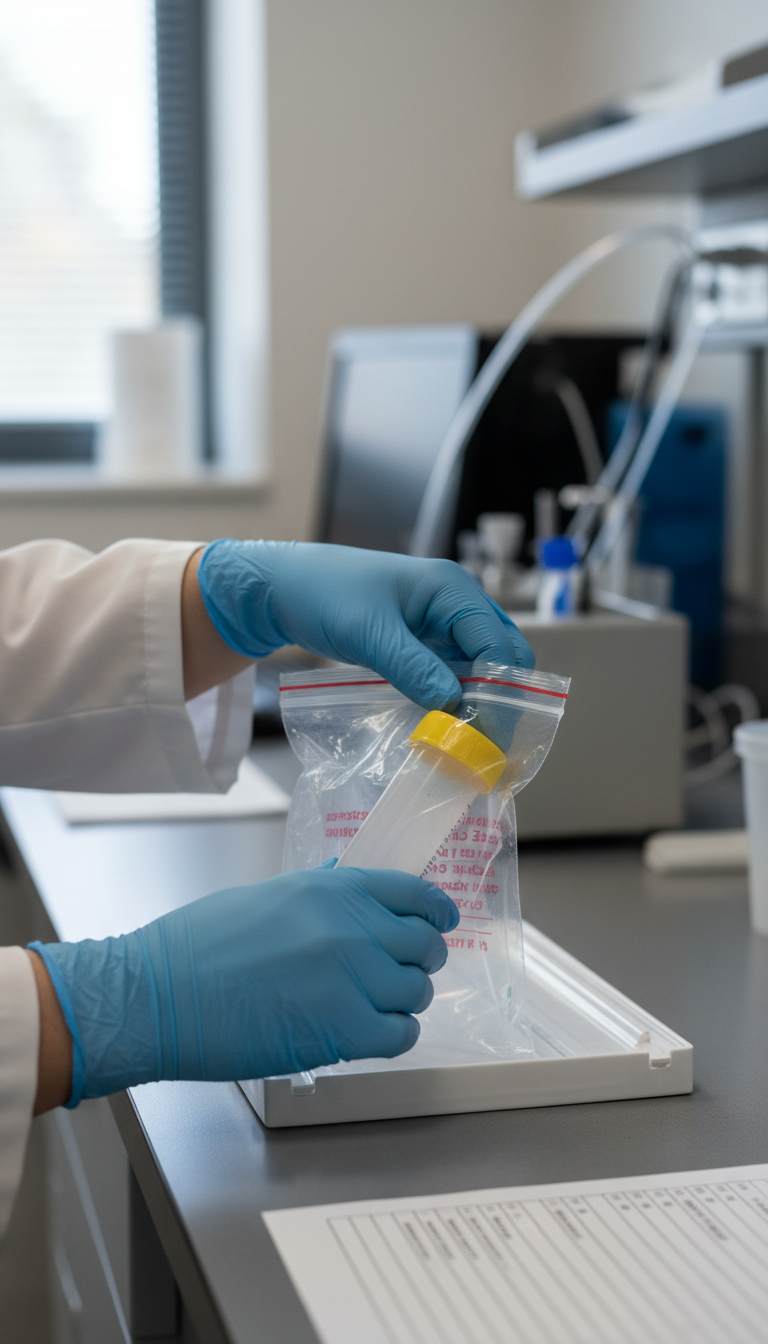
Understanding the procedural divide is essential for maintaining both workplace safety and audit compliance. While both processes aim to identify substance abuse, the administrative and legal requirements diverge significantly across five key areas. Building on the flexibility of private programs, local business owners must categorize the specific operational differences that define DOT vs non-DOT drug testing to avoid costly procedural errors.
Feature | DOT Testing (Regulated) | Non-DOT Testing (Non-Regulated) |
|---|---|---|
Regulations | Federal 49 CFR Part 40 mandates. | NC state laws and company policy. |
Testing Panels | Fixed 5-panel (no substitutions). | Customizable (5, 10, or 12-panel). |
Collection Steps | Strict federal CCF protocols. | Forensic CCF; flexible protocols. |
Positive Results | Mandatory SAP and Return-to-Duty. | Company-defined disciplinary action. |
Record Keeping | Federal Clearinghouse reporting. | Internal personnel file retention. |
Regulations: DOT testing is a matter of federal law. If an employee falls under a DOT agency, the employer has no choice but to follow 49 CFR Part 40. Non-DOT programs are governed by the North Carolina Controlled Substance Examination Regulation Act and the specific language in the employee handbook.
Testing Panels: The DOT requires a specific 5-panel screen. Employers cannot add alcohol or extra drugs to a DOT chain of custody form. For non-DOT specimen collection, Charlotte companies can add testing for substances like synthetic fentanyl or nicotine depending on their safety needs.
Collection Procedures: DOT collections require a split specimen and specific temperature verification steps that are non-negotiable. Non-DOT collections may use single or split specimens and offer more varied protocols based on the employer's contract with the laboratory.
Consequences: A positive DOT result triggers a mandatory referral to a Substance Abuse Professional (SAP). The employee is immediately removed from safety-sensitive duties. Non-DOT consequences are determined by the employer; this might include immediate termination or a company-funded recovery program.
Record Keeping: For DOT industries like trucking, positive results must be reported to the FMCSA Clearinghouse. Non-DOT results are private medical records kept within the company.
TL Works protects your business by ensuring the correct Custody and Control Form (CCF) is used for every donor. Using a federal form for a non-regulated test is a common error that can lead to a "fatal flaw" during an audit. Our DOT specimen collection services prioritize this administrative accuracy, ensuring that your records are defensible and your fleet remains compliant with federal inspectors.
Who Needs DOT Testing? Identifying Safety-Sensitive Positions
Determining which employees belong in a regulated pool is the most critical step in maintaining workplace safety and audit compliance. The Department of Transportation defines specific safety-sensitive roles where impairment poses a direct threat to public safety. If a position falls under these definitions, the employer is legally required to enroll that individual in a DOT program.
In the Charlotte metro area, business owners should use the following checklist to identify regulated employees:
FMCSA: Anyone operating a commercial motor vehicle (CMV) that requires a Commercial Driver’s License (CDL). This includes vehicles weighing over 26,001 pounds, those designed to transport 16 or more passengers, or vehicles carrying hazardous materials requiring placards.
FAA: Flight crews, pilots, flight attendants, aircraft maintenance personnel, and ground security coordinators.
PHMSA: Employees performing operation, maintenance, or emergency response functions on a pipeline or liquefied natural gas facility.
A common mistake among firms is over-testing. This occurs when an employer places a non-regulated employee into a DOT random testing pool. This is a regulatory violation. Using DOT specimen collection services for a warehouse worker or office staff member who does not perform safety-sensitive duties undermines the integrity of the federal program. For those roles, non-DOT specimen collection is the appropriate path. Correctly sorting your staff ensures you do not face fines for improper use of federal resources while navigating the nuances of DOT vs non-DOT drug testing.
Why Non-Mandated Industries Benefit from Drug-Free Workplace Programs
Industries operating outside federal oversight, such as local retail groups, hospitality businesses in Uptown, and non-CDL logistics providers, still face significant risks regarding substance abuse. Implementing a voluntary program through non-DOT specimen collection offers tangible financial incentives beyond mere safety. In North Carolina, employers who establish a certified drug-free workplace can qualify for a 5% discount on their workers' compensation premiums. This reduction directly impacts the bottom line, especially for businesses with high employee counts or physically demanding roles.
Beyond insurance savings, a proactive approach to DOT vs non-DOT drug testing enhances overall workplace safety and audit compliance by deterring substance use before it leads to an incident. A consistent testing policy reduces the likelihood of costly litigation, minimizes absenteeism, and protects a brand’s reputation in the competitive Charlotte market. By establishing clear expectations for all staff, business owners create a culture of accountability that safeguards both their employees and their long-term profitability.
Navigating the Collection Process with TL Works in Charlotte
At TL Works, the collection process is designed to be seamless for the employee while providing legal protection for the employer. When a donor arrives at our Charlotte site, they are greeted by a Certified Collector who follows strict protocols to maintain the integrity of the specimen. For DOT specimen collection services, this includes a rigorous identification check and the securing of the collection area to prevent adulteration. The process for non-DOT specimen collection is handled with equal gravity, ensuring that local contractors receive the same level of professional scrutiny as an interstate trucking fleet.
Accuracy hinges on the precise execution of the hand-off and the immediate sealing of the specimen in the donor's presence. By adhering to these forensic standards, TL Works helps Charlotte businesses maintain workplace safety and audit compliance. Clear communication during the physical steps of DOT vs non-DOT drug testing builds trust, as both the donor and the employer can see that the results are based on a secure, tamper-proof chain of custody.