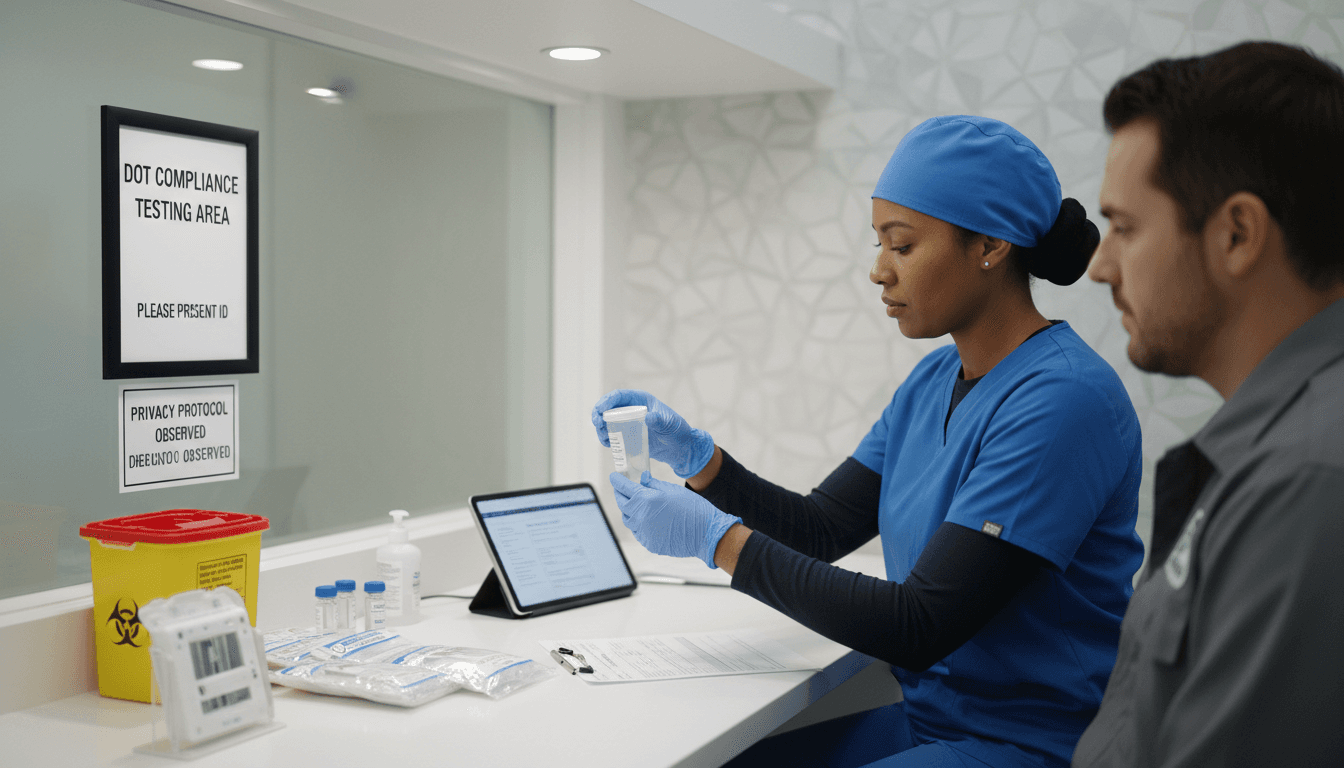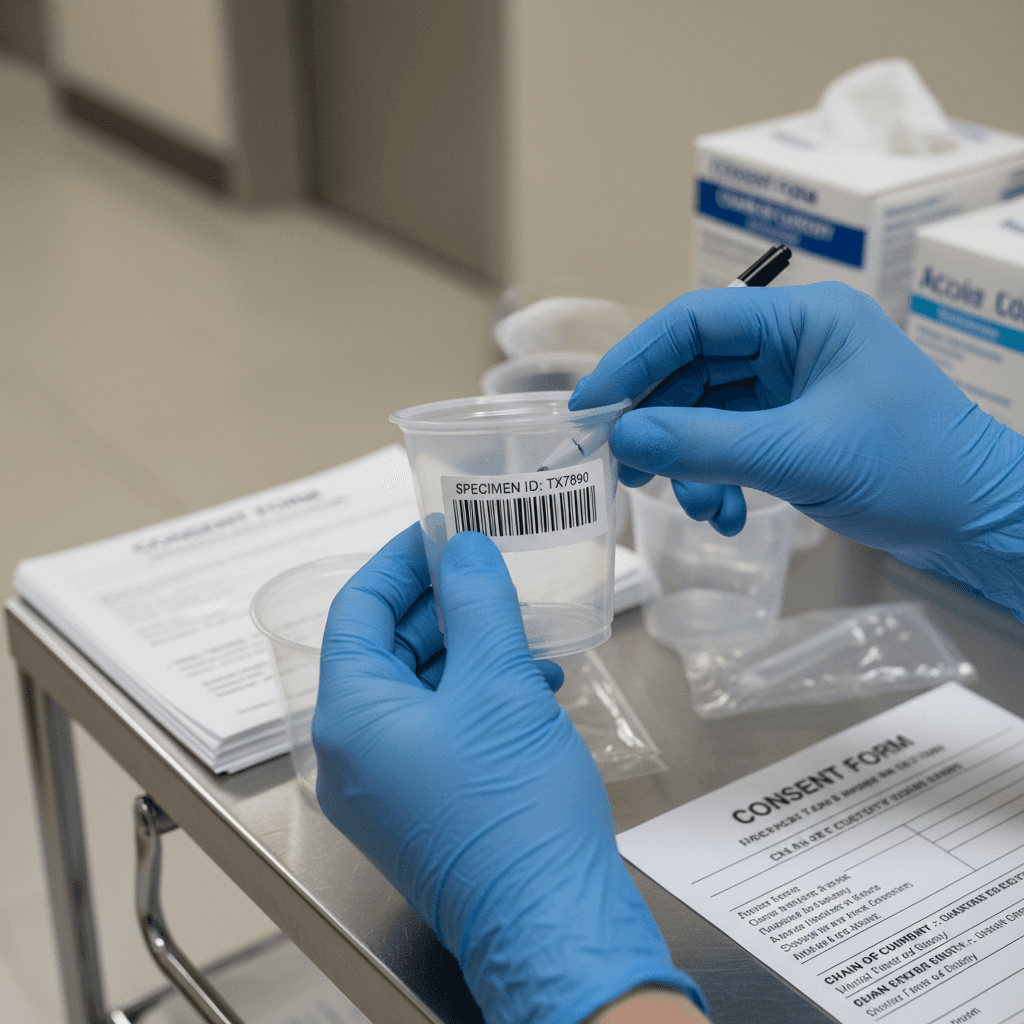
A DOT refusal to test occurs when an employee declines a required screening, provides an adulterated sample, or fails to report to a testing site promptly. This violation requires immediate removal from safety-sensitive duties; it carries the same professional consequences as a positive drug test result. Employees must complete a formal return-to-duty process and a Substance Abuse Professional evaluation before resuming regulated work.
For Charlotte trucking and construction employers, few situations create more immediate panic than a driver who hesitates or walks out during a drug screen. A DOT refusal to test is not simply a human resources headache; it is a critical safety violation that carries the same weight as a positive result under federal law. Mismanaging this process can lead to severe civil penalties, increased insurance premiums, and the sudden loss of essential personnel. This compliance guide explores the specific criteria outlined in 49 CFR Part 40.191 to help you navigate these high stakes moments with confidence. You will learn the crucial differences between collector and MRO determinations, the unique exceptions for pre employment testing, and the exact steps required to maintain compliance on the job site. By understanding these regulatory nuances, you can protect your company from liability while ensuring your fleet remains safe and operational.
Understanding the High Stakes of a DOT Refusal to Test
In the world of DOT regulated industries, a DOT refusal to test is not just an administrative headache; it is legally equivalent to a positive drug test result. For Charlotte fleet managers and construction foremen, understanding 49 CFR Part 40.191 is critical to maintaining a compliant workplace. Under this federal regulation, the consequences for a refusal are immediate and severe, requiring the employee to be pulled from safety sensitive duties and undergo the DOT Return to Duty Process before they can ever return to the driver's seat or the job site.
Employers often assume a refusal only happens when a driver flatly says no. In reality, many refusals are technical in nature. These include failing to show up within a reasonable time or leaving a collection site before the process is finished. For businesses operating near Charlotte's busy I-77 and I-85 corridors, the stakes are particularly high. A post accident test or a roadside inspection can trigger these requirements at a moment's notice. If your driver fails to comply with the technicalities of the collection, your company faces the same liability and reporting obligations as if they had tested positive for a controlled substance. Utilizing professional DOT specimen collection services ensures that these high stakes moments are handled with the precision required to protect your business. If you have questions about specific scenarios, feel free to contact TL Works.
What Constitutes a Refusal Under 49 CFR 40.191

To maintain a safe job site in the Charlotte metro area, employers must look beyond a verbal “no” and recognize the specific behavioral triggers outlined in federal law. A DOT refusal to test is strictly defined by 49 CFR 40.191 to prevent employees from manipulating the testing window or subverting the collection process. Each of these actions effectively terminates the testing process and carries the same weight as a laboratory-confirmed positive result.
Failure to appear within a reasonable time. The employer, not the employee, determines what constitutes a “reasonable time” for the driver to reach the collection site. This prevents individuals from intentionally delaying the test to allow substances to metabolize below detectable levels.
Failure to remain at the testing site. Once an employee arrives, they must stay until the process is complete. Leaving the clinic because of long wait times or personal appointments constitutes a refusal because it breaks the chain of custody and oversight required for a valid sample.
Failure to provide a specimen. While "shy bladder" is a physiological possibility, a simple inability to provide enough urine is not an immediate pass. If an employee fails to provide a sufficient volume and refuses to follow the subsequent instructions for the shy bladder protocol, it is documented as a refusal.
Failure to permit observation or monitoring. In specific cases, such as a DOT Return to Duty Process or follow up testing, federal law requires the collection to be directly observed. Refusing to allow a collector to follow these mandatory protocols is an automatic refusal.
Failure to undergo a medical evaluation. If an employee cannot provide a sample, they are directed to a medical evaluation to determine if a clinical condition exists. Refusing this evaluation, or failing to attend it in the required timeframe, triggers a refusal because there is no medical justification for the lack of specimen.
Beyond behavioral issues, the integrity of the specimen itself is a factor. Under Section 40.23, if a laboratory determines that a specimen has been adulterated or substituted, the Medical Review Officer (MRO) will verify this result as a refusal. These are considered intentional acts to subvert the testing program. Using professional DOT specimen collection services ensures that these nuances are documented correctly, protecting your firm from liability. For guidance on documenting these specific behaviors, you can contact TL Works to consult with our compliance team.
The Pre Employment Exception: When No is Not a Refusal
While the consequences of a DOT refusal to test are generally uncompromising, federal regulations provide a specific exception for pre-employment scenarios. This distinction is critical for Charlotte construction firms and freight companies that frequently manage high turnover or seasonal hiring cycles. Under 49 CFR 40.191, if a prospective employee fails to appear for a pre-employment drug test, it does not constitute a refusal. Furthermore, an applicant can leave the collection site before the testing process officially commences without facing the legal penalties of a refusal.
The commencement of the test is the pivot point for this exception. For drug testing, the process officially begins the moment the collector hands the applicant the specimen container. If the individual leaves the clinic lobby before receiving that cup, you simply do not hire them; you do not report them to the FMCSA Clearinghouse or initiate the DOT Return to Duty Process.
This flexibility differs sharply from random, post accident, or reasonable suspicion testing. In those instances, any failure to report to the site within the employer-specified reasonable time is an automatic DOT refusal to test. Once an employee is already on your payroll and performing safety sensitive duties, the leeway afforded to applicants vanishes. Ensuring your hiring managers understand this boundary prevents unnecessary reporting errors and legal friction. For specialized DOT specimen collection services that help navigate these procedural nuances, contact TL Works for expert assistance.
Who Determines a Refusal: Collector vs. MRO vs. DER
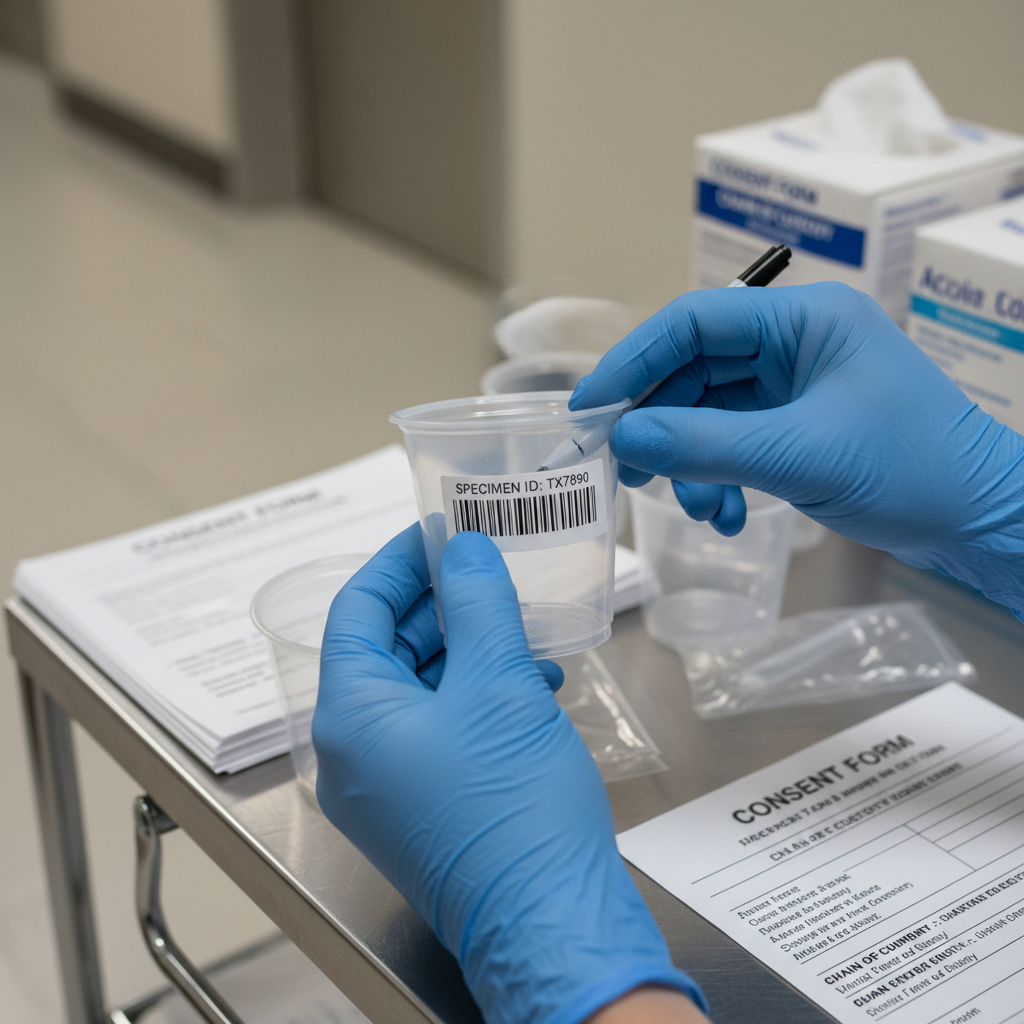
Identifying who holds the authority to declare a DOT refusal to test is essential for maintaining regulatory compliance. It is a common misconception that the collection site or the laboratory makes every determination. In practice, the responsibility is divided between the collector, the Medical Review Officer (MRO), and your firm’s Designated Employer Representative (DER). Understanding these distinct roles helps Charlotte employers defend their actions during a DOT audit and ensures the DOT Return to Duty Process is initiated only when legally required.
The collector is responsible for procedural refusals that occur at the collection site. If a worker leaves the facility after the process has started or behaves in a way that prevents the completion of the test, the collector documents the specific behavior and officially declares the refusal. The MRO, meanwhile, handles refusals rooted in science and medical evaluations. When a laboratory reports a specimen as adulterated or substituted, the MRO verifies the result as a refusal. The MRO also makes the final call if an employee fails to provide a sufficient volume of urine and cannot offer a valid medical explanation following a mandated clinical evaluation.
The DER holds the most significant responsibility regarding "failure to appear" refusals. When you notify a driver of a random or reasonable suspicion test, you are the one who determines if they arrived within a reasonable timeframe. Because the burden of proof rests on the employer, you must maintain meticulous records to support this decision. This includes documented notification times and a clear written policy defining travel expectations between job sites and the clinic. Utilizing professional DOT specimen collection services ensures that the paperwork generated at the site aligns perfectly with your internal records. If you encounter a complex scenario where the lines of authority seem blurred, you can contact TL Works to consult with our compliance experts.
Immediate Employer Actions Following a Refusal

Once a determination is made, the employer must act decisively. The following protocol ensures your Charlotte business remains compliant with federal safety standards while mitigating the legal risks associated with a non-compliant driver or laborer.
Immediate removal from safety-sensitive duties. Federal law requires the immediate removal of the individual from all safety-sensitive functions. For a local construction firm or trucking fleet, this means the employee cannot drive a commercial motor vehicle, operate heavy machinery on a Ballantyne job site, or perform any task that could impact public safety. This removal is non-negotiable and must happen the moment you are notified of the refusal.
Provision of SAP resources. You are legally required to provide the employee with a list of qualified Substance Abuse Professionals (SAPs). This list must include names, addresses, and phone numbers of SAPs available to the employee. Even if you choose to terminate the individual immediately, you must still provide this resource so they have a pathway to begin the DOT Return to Duty Process if they wish to work in the industry again.
Regulatory reporting. For employers of CDL holders, the DOT refusal to test must be reported to the FMCSA Clearinghouse. This report must be completed by the close of the third business day following the date you obtained actual knowledge of the refusal. This ensures the violation follows the driver's record, preventing them from jumping to another fleet without completing the necessary rehabilitation.
A critical point of confusion for many owners is the timing of these actions. If a collector documents a procedural refusal at the clinic, such as the employee walking out before the process is finished, you must not wait for a Medical Review Officer to verify a result. The collector's documentation at the site is sufficient to trigger the immediate removal requirement. To ensure your supervisors are trained on these immediate response steps, you can contact TL Works for guidance. Utilizing professional DOT specimen collection services ensures that these site refusals are documented with the precision needed to defend your immediate disciplinary actions.
Common Refusal Scenarios in Charlotte Trucking and Construction
In the Charlotte metro area, logistical hurdles are frequent, but they rarely excuse a DOT refusal to test. Consider a driver notified for a random test while operating near the I-485 and I-77 interchange. If your company policy dictates that the driver must report to the collection site within ninety minutes, and the driver arrives three hours later citing heavy congestion, the burden of proof for a failure to appear falls on the employer. Federal regulations grant the employer the authority to define reasonable time. Without a clear written policy that accounts for local travel distances and traffic patterns, defending this determination during a DOT audit becomes difficult.
Similarly, a laborer at a Ballantyne construction site might visit a collection clinic during a busy mid-day rush. If the worker decides to leave because the wait exceeds their scheduled break, they have committed a refusal if they already checked in and the testing process was initiated. Federal law does not recognize long wait times as a valid reason to depart. Utilizing professional DOT specimen collection services can help minimize these delays, but your internal documentation remains the primary defense. To ensure your company policies are robust enough to withstand legal scrutiny, contact TL Works to review your notification procedures. Clear communication prevents employees from inadvertently triggering the DOT Return to Duty Process due to a simple misunderstanding of the clock.
Can an Employee Fight a Refusal to Test?
While a driver or laborer might attempt to contest a DOT refusal to test, the burden of proof required to overturn a determination is exceptionally high. Challenges typically occur through the Medical Review Officer (MRO) for medical-based refusals or through a formal company grievance process for procedural issues. However, the Department of Transportation rarely accepts "I didn't know the rules" or "the collector didn't warn me" as valid defenses. Employees in safety-sensitive roles are legally expected to understand their compliance obligations under federal law.
To ensure your firm's actions are bulletproof against such challenges, you must verify that the collection site adhered strictly to 49 CFR Part 40 procedures. Most successful legal challenges against an employer stem from documented procedural errors made during the collection. Partnering with expert DOT specimen collection services mitigates this risk by ensuring that every step, from arrival time to specimen handling, is recorded with precision. If an employee refuses and later claims they were confused about the timeline, your written policy and the collector's log serve as your primary defense. If you need to audit your current documentation to prevent successful appeals, contact TL Works. Unless a refusal is formally rescinded by an MRO or a court, the employee must remain off-duty until completing the DOT Return to Duty Process.