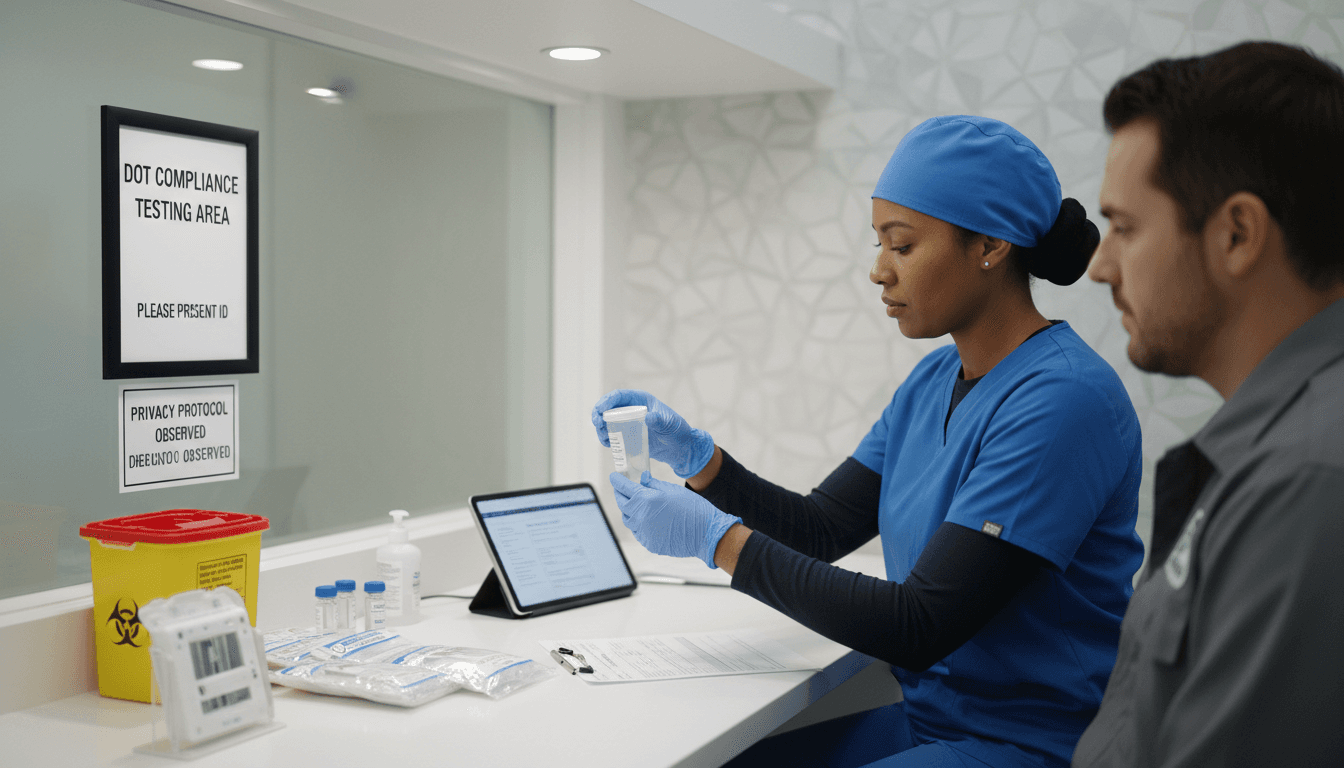
DOT random drug testing requirements mandate that employers use a scientifically valid method to select safety-sensitive employees for testing at minimum annual rates, such as 50 percent for drugs and 10 percent for alcohol. Selections must be spread reasonably throughout the calendar year, and employees are required to report to the collection site immediately upon notification. This unpredictable system ensures that every individual in the testing pool has an equal chance of being chosen during every selection period.
Staying compliant with DOT random drug testing mandates is a constant challenge for safety managers who face high stakes and thin margins for error. A single oversight in your random selection pool or a delayed notification can trigger severe regulatory penalties; more importantly, it can compromise the safety of your fleet and the public. Navigating these complexities requires a clear understanding of federal standards that often shift without much fanfare. This guide provides a comprehensive roadmap to help you maintain a defensible testing program. We will examine the mandated testing rates for 2025 and 2026, the mechanics of the selection pool, and the rigid timelines for specimen collection. You will also find actionable strategies to manage refusals and failed tests while upholding the highest standards of operational integrity.
Who is Subject to DOT Random Drug Testing Requirements?
The Department of Transportation (DOT) mandates drug and alcohol testing for employees in safety-sensitive positions across several federal agencies. This includes the Federal Aviation Administration (FAA), the Federal Railroad Administration (FRA), and the Pipeline and Hazardous Materials Safety Administration (PHMSA). However, in the Charlotte metropolitan area, the most frequent application of these rules falls under the Federal Motor Carrier Safety Administration (FMCSA) due to our region's heavy concentration of transportation and infrastructure projects.
Under FMCSA regulations, any individual who holds a Commercial Driver’s License (CDL) and operates a Commercial Motor Vehicle (CMV) on public roads is subject to DOT random drug testing requirements. This definition is broader than many employers realize. It encompasses not only your primary long-haul operators but also any part-time, intermittent, or backup drivers. Even a mechanic or supervisor who occasionally moves a CMV on a public road must be included in the random pool.
For the regional logistics companies and local construction firms that TL Works serves, maintaining an accurate roster is the cornerstone of compliance. If a person is authorized to perform a safety-sensitive function, they must have an equal chance of selection in every testing cycle. TL Works offers specialized DOT and non-DOT specimen collection services designed to keep your workforce safe and your records audit-ready. If you are unsure which employees in your organization meet the criteria for safety-sensitive status, you can contact TL Works to discuss your specific operational needs.
Current DOT Random Testing Rates for 2025 and 2026
The Federal Motor Carrier Safety Administration (FMCSA) sets strict annual minimum testing rates to ensure compliance with DOT random drug testing requirements. For the 2025 calendar year, the FMCSA has maintained a drug testing rate of 50 percent and an alcohol testing rate of 10 percent. These figures represent the minimum number of completed tests an employer must conduct relative to the average number of safety sensitive positions managed throughout the year. For instance, a Charlotte based fleet with an average of 20 driver positions must complete at least 10 drug tests and 2 alcohol tests by December 31st.
Employers planning for the 2026 cycle should note that the DOT evaluates these percentages annually. The FMCSA adjusts these rates based on the industry wide positive rate reported in the previous year's Management Information System (MIS) data. If the positive rate for drugs remains below 1 percent for two consecutive years, the agency may lower the requirement to 25 percent; however, if the rate meets or exceeds 1 percent, it remains at 50 percent.
DOT Agency | 2025 Drug Testing Rate | 2025 Alcohol Testing Rate |
|---|---|---|
FMCSA (Trucking/Construction) | 50% | 10% |
FAA (Aviation) | 25% | 10% |
FRA (Railroad) | 25% | 10% |
PHMSA (Pipeline) | 25% | N/A |
Staying ahead of these shifting mandates is essential for avoiding costly violations during a surprise audit. Companies utilizing professional DOT and non-DOT specimen collection services can ensure their testing volume remains compliant even as their workforce fluctuates. If you need help calculating your specific testing quotas for the upcoming year, you can contact TL Works for expert guidance tailored to the North Carolina regulatory landscape.
The DOT Random Drug Testing Pool Explained
Achieving these mandated annual percentages depends entirely on how an employer manages their selection pool. To comply with DOT random drug testing requirements, selections must be made using a scientifically valid method. In practical terms, this means using a computer based random number generator that is matched to a driver's social security number or a unique employee ID. This objective approach ensures that no supervisor or manager can influence who is selected for testing, protecting the integrity of the program.
Employers in the Charlotte area typically utilize one of two pool structures based on their fleet size. Larger logistics companies often maintain a stand-alone pool, where selections are drawn exclusively from their own roster. Conversely, smaller construction firms or owner operators generally join a consortium. A consortium pools drivers from multiple small businesses into a single large group, making it easier to meet the 50 percent drug and 10 percent alcohol testing quotas without the administrative burden of managing a private pool. If you are unsure which structure fits your business, you can contact TL Works for a consultation on your program management.
A critical, often misunderstood component of the pool is that every driver must have an equal chance of being selected during every selection cycle. This clarifies a frequent point of confusion regarding how often CDL drivers get tested. Because the process is truly random, a driver who is tested in January has the exact same statistical probability of being selected again in April. Compliance requires that once a specimen is collected, the driver's name is immediately returned to the pool for the next draw. TL Works provides DOT and non-DOT specimen collection services to support both consortium and stand-alone programs, ensuring that every selection is handled with technical precision.
Notification Procedures and Strict Time Limits
Selection is only the beginning of the compliance chain. Once a driver is selected from the pool, the employer must ensure the notification process follows strict federal protocols. Per DOT random drug testing requirements, these tests must be unannounced and spread reasonably throughout the calendar year to maintain the element of surprise. An employer cannot schedule random tests in advance or allow a driver to choose their own time to report; the selection must remain confidential until the moment the driver is told to head to the collection site.
The most critical compliance factor involves the time limit between notification and arrival at the facility. Regulations state that once a driver is notified, they must proceed immediately to the collection site. In a practical sense, this means the driver should cease performing safety sensitive functions as soon as it is safe to do so and head directly to the site. There is no allowance for completing a long haul delivery, stopping at home for personal items, or finishing a shift. Any unnecessary delay can be legally interpreted as a refusal to test, which carries the same severe consequences as a positive result.
Effective coordination is vital to avoid these pitfalls. When a driver is notified, the employer should document the time of notification and provide the driver with the location of the nearest collection facility. For companies operating in the Charlotte area, TL Works offers DOT and non-DOT specimen collection services that streamline this transition. We work closely with fleet managers to ensure that once a driver is pulled off the road or out of the warehouse, their arrival at our facility is expected and documented. This tight window of time protects the integrity of the specimen and prevents accusations of tampering. If your business needs assistance establishing a notification protocol that satisfies DOT auditors, you can contact TL Works to review your internal procedures.
What Happens During a Random Specimen Collection?
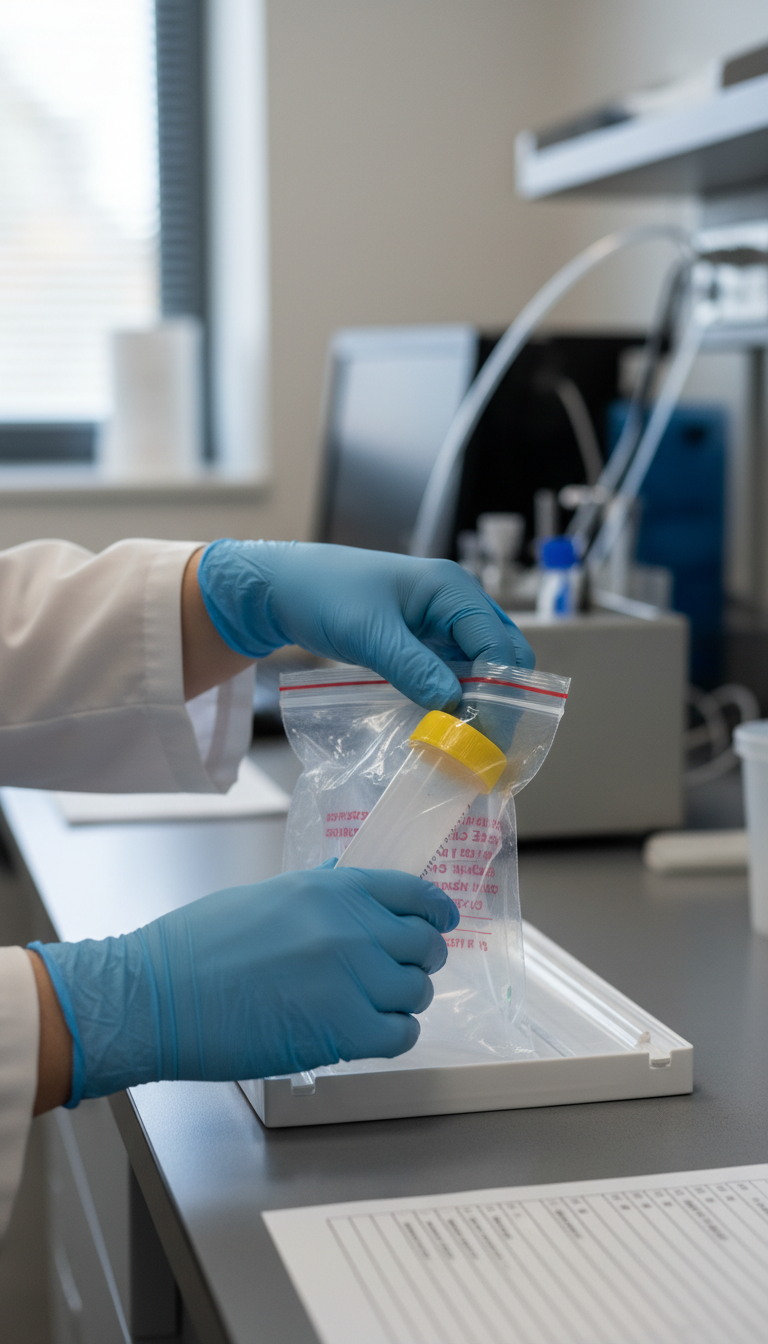
When a driver arrives at a facility providing DOT and non-DOT specimen collection services, the process begins with a formal identification check and the removal of outer clothing, such as jackets or hats, to prevent tampering. The standard procedure for meeting DOT random drug testing requirements involves a 5 panel urine test. This panel screens specifically for marijuana metabolites, cocaine, amphetamines, opioids (including codeine, morphine, and semi synthetic opioids), and PCP. While the DOT has officially authorized oral fluid testing as an alternative, its full implementation is currently delayed while laboratories across the country work toward the required federal certifications.
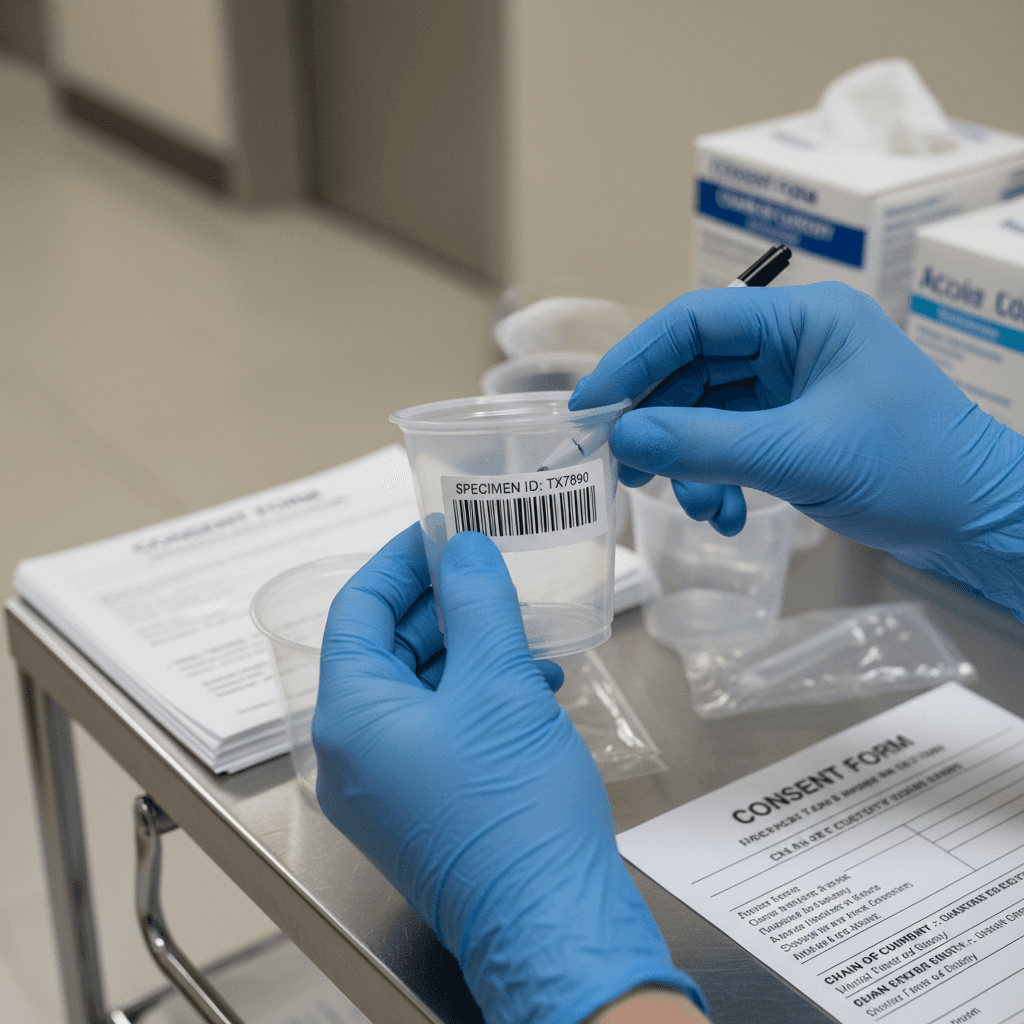
Documentation is the most critical aspect of the visit. The collector and driver complete the Federal Drug Testing Custody and Control Form (CCF), which tracks the specimen from the moment of voiding to the final laboratory analysis. This paper or electronic trail is vital for audit compliance and legal defensibility. If a laboratory identifies a positive result, it is not immediately reported to the employer. Instead, a Medical Review Officer (MRO), a licensed physician with specialized training, reviews the result. The MRO contacts the driver to determine if there is a legitimate medical explanation, such as a valid prescription, before making a final determination. For Charlotte area businesses, choosing a partner who understands these technical nuances is essential. You can contact TL Works to learn more about how we manage this secure chain of custody and support your driver through the collection process.
Consequences of a Failed Test or Refusal to Test
Once the MRO confirms a positive result or a collector documents a refusal to test, the employer must immediately remove the driver from all safety sensitive functions. A refusal, which includes any failure to report to the collection site within the allotted time, carries the same legal weight as a failed random drug test. In the fast paced trucking and construction sectors of Charlotte, this immediate removal can disrupt operations, but failing to do so invites catastrophic liability and heavy federal fines during a DOT audit.
To eventually regain eligibility, the driver must complete the Return to Duty (RTD) process as outlined in 49 CFR Part 40. This begins with an evaluation by a qualified Substance Abuse Professional (SAP). The SAP prescribes a specific plan of education or treatment; only after the driver successfully completes this plan can they be cleared for an RTD test. This particular test must be conducted under direct observation. If the result is negative, the driver can return to the road but remains subject to a follow up testing plan. This plan involves at least six unannounced, directly observed tests within the first 12 months, though the SAP can extend this requirement for up to five years.
Compliance also requires reporting the violation to the FMCSA Drug and Alcohol Clearinghouse within three business days. Accurate reporting ensures that a driver cannot simply move to another firm without addressing the violation. Managing these complex DOT and non-DOT specimen collection services and reporting timelines is a critical employer responsibility. If your team needs guidance on navigating a positive result or managing the SAP referral process, you can contact TL Works for expert support in staying aligned with all DOT random drug testing requirements.
Best Practices for Maintaining a Compliant Random Program

Managing the logistics of a mobile workforce requires more than just enrolling in a pool. To fully satisfy DOT random drug testing requirements, Charlotte business owners must implement a rigorous internal auditing schedule. At a minimum, perform a quarterly review of your active driver roster. This ensures that new hires are added before their first safety sensitive shift and that terminated employees are promptly removed to avoid skewed selection data.
Compliance also hinges on meticulous recordkeeping. Under 49 CFR Part 382.401, employers must maintain records of verified positive results and test refusals for at least five years. Negative results and records of the selection process should be kept for at least one year. Beyond paperwork, ensure your supervisors have completed the mandatory two hours of Reasonable Suspicion training, consisting of 60 minutes for alcohol and 60 minutes for controlled substances. This training empowers your team to identify signs of impairment on the job site, providing a vital layer of safety. If you need assistance streamlining these administrative tasks, you can contact TL Works to integrate our DOT and non-DOT specimen collection services into your safety program.